Sunday, April 26, 2009

Day Twenty-Nine, Part Two: Unconvention


(Note: the above photo was taken by a colleague of mine at the Wake student magazine.)

The Republican National Convention kicked off this school year with a bang, and the first weeks of the semester were saturated with talk of police brutality, journalists being arrested, anarchists throwing benches through bank windows, and so on. I only participated in a small way: I wasn't tear gassed or arrested and I didn't see any of that happen, because my friend Kris and I went to St. Paul on the first day of the convention, when things were still relatively calm. We saw people wearing black and bandannas over their faces marching and yelling "Whose streets? Our streets!" but we mostly just wandered around, people-watching. We did carry signs supporting Obama and universal health care--and got the finger or belligerent comments from a few passersby--but we were pretty separate from the main protests, which were mostly anti-war and far-left-leaning.

I know people, mostly student reporters who are my classmates in the journalism school, who were tear gassed or detained by police. But until I saw Unconvention, a "mixtape" that pieces together various independent news sources' footage from that week, it didn't really hit home just how scary and intense it was, and how close Kris and I came to getting in trouble. We were completely peaceful and tried to avoid angry clusters of people, but the film showed people getting pushed around and/or arrested just for sitting in a park, or "crossing police lines" by stepping off a curb. A woman told a story of how her fellow journalist was shoved to the ground, injured, and arrested simply for videotaping other people getting arrested. Just before we left St. Paul that day, we were walking near a large group of young anarchists marching with a yellow "Don't tread on me" flag. Footage in the film from that day showed what looked like that same group running in terror as police threw tear gas canisters and marched along in their riot gear. If we hadn't peeled off from the group and gone to catch the bus back to campus--it was hot and we had been there for several hours--we probably would have been in that group. We could easily have been caught up in one of the mass arrests of huge groups of people, just because we happened to be there.

Though I'm sure there were arrests of people who were being legitimately violent, the police brutality shown on film seemed almost completely uncalled for. I don't know how police are trained or what the riot cops were specifically told for the RNC, but it seems to me that tear gas and pepper spray should be used only if necessary, not on peaceful protestors or helpless individuals like the girl in this video. It sickened me to think of how the entire debacle has more or less been forgotten. At least the Republicans didn't win, but that doesn't change the horrible conduct of police and local officials who denied that such things were going on.

The screening of this film (at the film fest) really got interesting after it ended and the director stood up for a Q&A. Legitimate questions about his filmmaking process quickly deteriorated into a shouting match between him and three or four extremely loud and belligerent older men, all of whom seemed to be extreme leftists still furious about the RNC. Which is understandable, but they attacked the director and his attempts to be balanced and find "assholes" on both sides of the issue, seeing that as disrespectful to the protestors and too kind to the cops. The director admitted that he did not take part in the protests at all, explaining that he wanted to be as unbiased as possible in making the movie. But that wasn't a good enough explanation for the angry audience members (who did seem to be a vocal minority, judging by the eye-rolls and amazed laughter of the people sitting near me and the attempts to shush the shouters). They saw his film as trying to interpret and sterilize a hugely significant event that to them remains very personal and painful. I'm sure the horror of being shoved around by police, tear gassed and pepper sprayed, arrested and (in some cases) charged with felonies doesn't go away overnight. Despite that, though, I can't help wishing I'd been more involved in the RNC. I wish I'd been marching proudly with some of those protestors, that I'd learned firsthand what it's like to be tear gassed. I'm almost never in the thick of things, just as I wasn't actually at the riots last night. I have my own stories of the RNC and I recognize its importance, but it could have been a major event of my college years and my life. Instead, all I have are other people's memories.

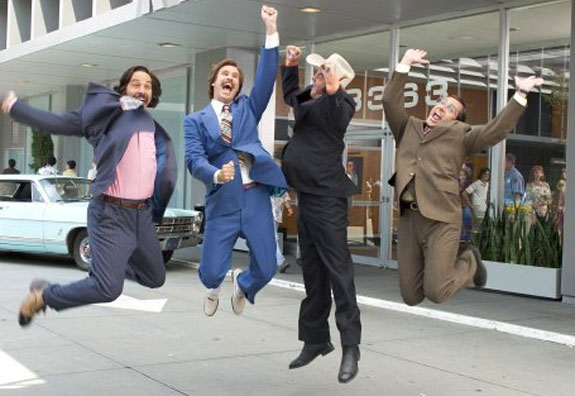
Day Twenty-Nine: Anchorman


This morning, back in my apartment as news about last night's riots came in and rain drizzled outside, all I wanted to do was huddle under a blanket and watch Anchorman. It's the perfect movie to lie back and enjoy mindlessly, cracking up at the countless hilarious lines that have become classic to college boys since it came out. Sure, it's dumb, but it's well done. It's genuinely hilarious and has a fairly unique plot. Its random absurdity makes it more than just another series of sexist, racist, homophobic jokes, partly because it makes fun of the kind of dimwitted, chauvinist guys who laugh at that stuff.

I didn't always love Anchorman. When I first saw it with my dad and sister, all three of us hated it. When I was in high school, we would spend lazy Sunday afternoons at the North Towne theater, a musty basement complex that showed late-run movies for a dollar. It's now defunct--my hometown once had five theaters and now only has two huge, identical multiplexes--and although I hadn't been there in two or three years, I miss it. I saw the re-release of Snow White and the Seven Dwarfs there as a little kid, and I saw my first PG-13 movie there: Batman and Robin, which we actually left early because my mom accidentally sat in a seat without a back and fell and hurt herself. Though I love my place of employment, Showplace 16, and I've worked there long enough for it to learn its quirks, there's still nothing like seeing a movie in a crappy dollar theater.

Anyway, my dad and sister and I would drive across town to catch matinees almost every Sunday, and we always saw the most terrible movies--the ones we wouldn't pay full price for but didn't mind seeing cheaply. Anchorman was by no means the worst of the bunch, but for some reason we all despised it. I remember thinking it was stupid and boring. Four or five years later, I'm not sure why. Maybe I just hadn't yet developed the sense of humor that now allows me to crack up at lines like "I know what you're thinking, and the answer is yes. I have a nickname for my penis." I still do this occasionally, but I used to be especially bad about hating something just because dumb guys liked it and latching onto that hatred with ferocity. In elementary school, I yelled at boys for being too obsessed with their Game Boys and yo-yos; in high school, I glared and shook my head when my guy friends quoted Anchorman or South Park. Then one night freshman year, I got sucked into watching it one weekend night with other kids on my floor, and found it hilarious. And watching it three or four times since then, I find that it just gets funnier every time. The classic lines actually get better with familiarity. I may turn up my nose and watch foreign films and acclaimed independents, but I'm as susceptible to ridiculous humor as the next person. I'm in a glass case of emoootiiooonnn!

Day Twenty-Eight: Bring It On


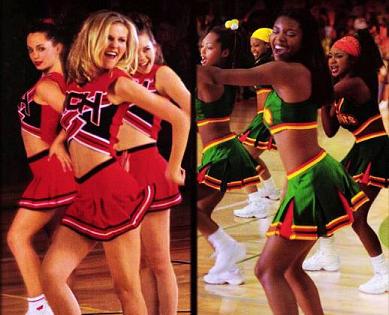
I watched Bring It On yesterday but didn't get a chance to blog about it until today. Last night...got kind of out of hand. I spent the early evening strolling around Dinkytown and frat row taking pictures of all the kids who had been drinking since early morning for Spring Jam, the U's annual Greek-centric block party thing. When the headliner for the night's concert, Talib Kweli, canceled, my friends and I headed to their place in Dinkytown. The streets and liquor stores were full of drunk kids. Back at the apartment, we were just relaxing until someone broke out a bottle of Patron, and things got crazy fast. Only random texts and phone calls indicated the real insanity going on a few blocks away: bonfires in the streets, a clash with the police that involved tear gas and rubber bullets, a frat house apparently on fire (although the news reports I've seen today don't mention that, so maybe it was a just a rumor). Though the whole incident is mostly laughable to me (as far as I know no one was hurt seriously, although the TV news reports did show some tear gas canister wounds), it's still a little weird to shift from that intensity back to a shiny, peppy '90s movie about cheerleading, in which the first line is "I'm sexy! I'm cute! I'm popular to boot!" I like Bring It On; parts of it are funny and it's definitely entertaining. It's almost laughably tame and artless compared to sharper, funnier teen chick flicks like Mean Girls and Clueless, but it agreeably passes the time for an hour and a half.

I didn't see Bring It On when it came out. My first viewing of it came freshman year, when a bunch of the girls from our floor crowded into a dorm room to watch it, squeezing onto beds and beanbag chairs. More than the movie itself, I remember the fact that we were interrupted midway by a trio of nerdy kids from one of the arts floors, who were apparently wandering around and were happy to find a captive audience for things like a puppet show of stuffed animals they were carrying around. They were definitely strange, but we didn't mind, and the funny thing is that they kind of became friends with us all, and one of the guys even dated a girl who lived in that room for over a year. If for nothing else, I value the friendship with that guy because he and his weird friend that also hung around on our floor would always rope us into watching movies I'd never heard of--much artier fare than Bring It On, like Me and You and Everyone We Know and American Splendor--and they always turned out to be wonderful. I like the privacy of having my own room, being able to cook for myself, and so on, but I miss the days when you could always find something to do because everyone would always just be sitting around watching movies, dancing or listening to music, having random conversations, and occasionally drinking cheap rum or vodka in little huddles behind closed doors.

Anyway, Bring It On obviously has no pertinent associations about the first time I watched it; what it reminds me of is my own short stint as a cheerleader. In fifth grade, I tried out for the elementary school squad kind of on a whim, with my friend and neighbor. I didn't make it, but because it was elementary school I got to be on the "spirit squad," who still cheered but didn't get to wear a uniform, and then before we even had a game, enough girls quit to make room for me among the real cheerleaders. I've never been very athletic or coordinated, and I remember being a little annoyed at times with the bossy sixth grade girls who kind of controlled the rest of us, but I remember really enjoying being a cheerleader. Again, this was elementary school, so we didn't have a whole lot to do--certainly nothing like the complicated pyramids and gymnastics of Bring It On's cheerleaders--but I liked doing all of our cheers, and the little dance routines we did at halftime. Our basketball team that year was pretty good; there were a few kids who, to us at least, were superstars, and they made it to the semifinals. There was a pep rally, and I remember being really proud as the cheerleaders marched in among all the kids and teachers forced to go to the assembly, our hands behind our back with elbows pointed out as we always did while walking. Of course, back in class I got taken down a peg as the boys sneered and made fun of me, but I really did enjoy it. But then that was it: I never had any desire to cheer even just the next year, when a couple of my friends were on the middle school squad. Two years later, people who hadn't known me in fifth grade were openly shocked that I had been a cheerleader; it was something of an anomaly for bookish, determinedly nonconformist me. What's funny is that even though this was a year or two before Bring It On came out, we did our halftime routine to the same song, "Get Ready for This," that the movie's Toros use, and sometimes we would do the cheer from "Mickey," which plays during the credits and outtakes at the end of the movie. I guess cheerleading is just pretty stereotypical and easy to mock--but I'm still glad I did it for that one year.

Friday, April 24, 2009

Day Twenty-Seven: Mysterious Skin


Spring has come to Minneapolis, making it a lot harder to justify sitting inside and watching movies. That's my excuse for yesterday, anyway, when I spent much of my free time strolling around in the sun with friends or entertaining them at my place. The night before I spent with the band I'm promoting this semester, setting up for and photographing a gig of theirs. Tonight, with no obligations and the shouts of Spring Jammers echoing outside, I could finally catch up somewhat. Mysterious Skin may not have been the best movie to get back on track with, however; though it's very good, it was also extremely dark and depressing. I may have to watch something especially lighthearted now to keep from going to be in this state of uneasy sadness.

Although I really liked Brady Corbet's character and the child abuse storyline was both mesmerizing and frightening, the most interesting parts to me were those following Joseph Gordon-Levitt's life working on the street. It reminded me a lot of River Phoenix's character in My Own Private Idaho. Gay prostitution scenes in movies take on an added depth of emotion (to me, anyway) because of the implication that these men, many of them shy and friendly and outwardly "normal," have to hide their sexual preference as this secret, sneaking shame. The scene in which an older man takes the young hustler home and undresses to reveal that he's covered with lesions from AIDS was particularly wrenching. Though many parts of the movie were moving, this was the scene that brought tears to my eyes: a dying man asking only for his back to be rubbed, to have some human contact. Movies and books about the early days of AIDS are interesting and depressing to me, as I think about what it must have been like to have to worry about a rapidly spreading, deadly disease that was dismissed by mainstream America, just at the time when gay men were beginning to be more open and enjoy the freedom of promiscuity. It's not the only thing to hold against him, but the main reason I'll always have a grudge against Ronald Reagan is his refusal to acknowledge AIDS as a major national problem. His personal belief that homosexuality is a sin kept him from taking a stand against an epidemic. Only when straight people started dying did Reagan and the rest of the mainstream give AIDS attention. That remains unconscionable to me.

Watching the movie, though I was involved in the plot, I couldn't help but think about what an intense, difficult role this must have been for Joseph Gordon-Levitt. But that's not unusual for him: he's been in several dark independent films, including the excellent Brick. I always look forward to seeing him in movies, and I hope he keeps taking these challenging roles.

Tuesday, April 21, 2009

Day Twenty-Four, Part Two: No One Said It Would Be Easy


My second film fest movie was the one I'd known about longest and was most looking forward to at the festival. It's a documentary all about Cloud Cult, which in my opinion is the best Twin Cities-based band currently recording and performing, and which has become one of my favorite bands in the last year. It was almost exactly a year ago, in fact, that I first saw them in concert. I had known about them and half-intended to check them out for a while, and when I saw they were performing at First Ave I decided to give them a listen. I bought tickets to the concert after listening to two songs on their Myspace, something I have never done before or since.

Cloud Cult's music is just amazing--beautiful, raw, heartfelt, inspiring. It comes from a place that I think few artists allow themselves to convey: deep pain and grief arising from the lead singer and lyricist's loss of his two-year-old son, as well as general confusion about our place in the world and the cosmos, and hope that there is a plan and a pattern. Their lyrics have been a definite inspiration to me in the past year. Certain lines I repeat to myself: "'Please send us a miracle so I know that there is meaning.' He said, 'I think that it's a miracle just to be breathing.'" "You came up from the ground--from a million little pieces; have you found where your place is?" "Suck up, suck up and take your medicine. It's a good day, it's a good day to face the hard things." I've been considering getting a tattoo of the lyric "take your medicine" for almost a year--I remember telling people about it when I studied abroad in Rome last summer--because I feel like I could use a reminder of the message that I'm only a small part of this giant fabric, that countless people have it worse than I do, and that I need to face up to my problems and my past and take what comes to me.

Though I knew a little about Cloud Cult's back story--specifically, the death of lead singer Craig Minowa's son and their environmental focus--the film went into detail about how the band formed and how they work. I didn't know that the lineup I've seen them perform with twice is a relatively recent development, and that the band started as a solo project and for a while was a three-piece group. I didn't know that even the band members themselves, and the filmmakers, treat Craig Minowa like an enigmatic, insane genius. I didn't know--though I could have guessed--that their music has been especially important to people who have experienced loss, and that the band has received many letters from fans who have been touched specifically in that way. Most of all, the film celebrates their wonderful music, and it made me desperately want to see them in concert a third time--which is why I'm glad I have tickets to see them in a week and a half.

Day Twenty-Four: My Neighbor Totoro


My first introduction to Hayao Miyazaki came when I was a freshman in high school, before I had any real idea of being a film nerd or majoring in film studies. My good friend Sonya--whom I still credit with a lot of the comradeship and encouragement that made me love film--asked me to see Spirited Away at our local arthouse theater (now closed), and I agreed despite not knowing anything about it. The film's mythical, shapeshifting creatures and long stretches of strange images accompanied by haunting music were new to me, and I remember being unsure of how to feel as Sonya and I sat in the theater while melancholy music played over the end credits. A few days later, I mentioned the film to a classmate who worked at that theater, and she said, "Oh, I loved that movie!" She paused and laughed. "That was a weird movie."

That kind of confused enchantment is a little less complex and ambiguous in Miyazaki's much earlier film My Neighbor Totoro, which is more uniformly cheerful and delightful, but the theme of young girls interacting with fantastic spirits and creatures is the same. And there's still a slightly gloomy undercurrent: the main characters' mostly cheerful lives are overshadowed by the fact that their mother is hospitalized with a mysterious ailment. It's kind of a common theme in kids' movies like this one: alien creatures stepping into a child's life to fill the void left by a missing parent (like Elliot's dad leaving the family in E.T., or Bastian's mother being dead in The Neverending Story). Maybe it's just because I'm most familiar with Miyazaki through Spirited Away, in which nothing is as it seems, but I felt a slight sense of menace throughout the film, expecting seemingly friendly characters to reveal themselves as monsters, or for the sullen neighbor boy to be harboring a dark secret (apparently he was just shy). Despite that slightly disturbing undertone, though, and even with the beautiful animation, My Neighbor Totoro is at heart a pleasant kids' movie about lovely fantasies coming true, and a very enjoyable watch.

Monday, April 20, 2009

Day Twenty-Three: Chalk


I watched Chalk a while ago, but I decided to revisit it. It's one of the few mockumentaries I've seen besides the Christopher Guest movies, but it has more in common with The Office than with those movies. The Office is hands-down my favorite TV show--I've watched every episode at least twice--and it shares with Chalk the funny characters who take themselves way too seriously, in situations that feel very real because they're so boring and awkward. This movie, though a few parts go off into silly fantasy that doesn't fully work, looks and feels so authentic.

That's what I loved about this movie the first time I saw it. There are laugh-out-loud lines and moments, but what makes this movie work is the fact that it actually gets it, gets what high school is really like. Teen movies, even the best ones, never get it. Their high schools are populated by good-looking twentysomething actors, stratified into cliques and focused on events like prom. Obviously there are different social groups in high school, and events like prom are the source of much discussion and emotion. But what those other movies are too busy focusing on silly romances or overly serious dramas to see is the day-to-day drudgery that really is high school. And that's what Chalk captures so perfectly, from the very beginning: kids goofing off in class, cracking up at nothing, cell phones going off, hysterical assistant principals breaking up hallway fights, dead-eyed kids staring at teachers or sliding into class a few seconds late. From my time as a teacher's assistant for a few different teachers, copying and stapling endless worksheets and packets, I can vouch that the messing around with the copier and wondering about codes to punch into it are true to life.

I made my sister watch Chalk shortly after I did, and she agreed that it's the closest representation of our high school, Auburn, we've ever seen. This movie has no popular blonde kids; everyone's just sort of awkward and greasy. Most teen movies show "nerds" with thick glasses, precocious wardrobes, and a ridiculous knowledge of science and mechanics; this one accurately depicts them as mumbly, scraggly-haired, and probably obsessed with medieval weapons. Things could happen at the school in Chalk like someone setting fire to the bathroom soap dispensers (which happened last year at Auburn) or drive-by shootings in the school parking lot (the most recent of which occurred this morning). Chalk does focus on the teachers, so it doesn't have a chance to saddle the students with inauthenticity, but it's definitely as true to life, or at least to Auburn, as I've ever seen, and that's refreshing.

Sunday, April 19, 2009

Day Twenty-Two, Part Two: Love and Death


When I said, after watching Mighty Aphrodite, that it was strange to watch a Woody Allen movie I didn't like, that wasn't entirely true. Although I've almost uniformly loved his post-Annie Hall movies, full of the witty dialogue and neurotic New Yorkers I love and have grown to expect in his films, I haven't been particularly impressed with his early stuff, which is a lot more slapsticky and silly, and not very rooted in real life. Maybe that's why I didn't like Mighty Aphrodite as much, because its gimmicks and corny humor made it more like those earlier comedies. But I really enjoyed Love and Death, cracking up several times, despite the fact that it was a goofy anachronistic comedy based on Russian novels like War and Peace. Maybe it's just that I'm vaguely familiar with the source material (well, I've read the first hundred or so pages of both War and Peace and Anna Karenina, anyway). Maybe I just couldn't resist the idea of The Princess Bride starring Woody Allen and Diane Keaton, which is how I might describe this movie if pressed.

Love and Death isn't mentioned as often as Sleeper or Bananas in discussions of Allen's early movies, even though the Netflix description claims it's his personal favorite of all his films. The only place I'd heard of it before finding it on Netflix was from my magazine writing professor last semester. He laughingly recounted the scene in which Woody Allen, as a soldier about to go off to war, responds to a seconds-long anti-STD play put on for the soldiers with this typically deadpan and absurd review: "The part of the doctor was played with gusto and verve and the girl had a delightful cameo role. A puckish satire of contemporary mores. A droll spoof aimed more at the heart than the head." (That did turn out to be a very funny scene.) I might not have remembered the professor's anecdote--he referenced a lot of relatively obscure comedic books and movies, and told lots of personal stories--except for the fact that I had class with my friend Cody, who likes to make fun of my devotion to Woody Allen. I guess he's mostly known today for things that have nothing to do with his ridiculously wonderful movies, like his current legal battle with American Apparel for their use of a still from Annie Hall on a billboard. Well, at least I'm not the only person at the University of Minnesota who recognizes his genius--even if the only other one I've met is an over-50 professor.

Day Twenty-Two: Dancer in the Dark


Though I'd heard Lars Von Trier's films called dark and gloomy, I never expected so bleak and depressing a film as this one. Its main character, played by a beautiful and charming Bjork, lives in a half-dream world where her only wish is to save her son from her own fate of going blind, single-mindedly saving money for an operation for him. But the world is almost uniformly against her, despite the hope and tenderness she inspires in those around her (even a corrections officer on death row, where she eventually ends up after being charged with murder), and she ultimately meets a chilling end.

This movie reminded me most strongly, somehow, of recent film Changeling: in both, a mother works tirelessly for her son, and in both, she is accused of insanity and selfish plotting and wrongfully imprisoned (though the main character of Changeling eventually escapes and achieves some semblance of happiness). But while Angelina Jolie there was simply a normal, hardworking woman beset upon by circumstances beyond her control, Bjork here achieves a kind of tragic heroism in her refusal to admit her own blindness or to reveal her quest to the world, even when on trial, and in her elaborate daydreams inspired by the musicals she loves. The film opens as she struggles through a local production of The Sound of Music as Maria, and towards the end that scene is painfully and also gorgeously recreated as she stands in her cell, crying out the words in the otherwise silent prison, the cheerful words and her bouncing movements in wrenching contrast with her situation.

I first heard about this movie when I went to see Brokeback Mountain when it came out my senior year of high school. As my friends and I stood outside the theater, choking back the tears at that stark, painful film, a friend of a friend who was with us asked me if I'd seen Dancer in the Dark. Having finally seen it, over three years later, I can see the connection: neither offers much room for hope, and both leave you almost gasping. And both hammer the pain home with lovely music--I've never listened to Bjork much before, but her stunning voice will certainly stay with me.

Saturday, April 18, 2009

Day Twenty-One: School Play


I kicked off my own personal experience of the Minneapolis-St. Paul International Film Festival with this hilarious and heart-tugging documentary about kids at a New York elementary school putting on a production of The Wizard of Oz. The film followed five kids, all with different backgrounds and different approaches to the play. For overachiever Isabel, for example, playing Dorothy is only the least she expects of herself; for little Italian Joey, the play's an outlet for his goofy, hyper class-clowning. The "anchor" of the film, as the director acknowledged in a Q&A after the screening, is tubby, pragmatic Jeffrey, who begins the film as a gloomy target for bullies and ends up with new friends and a sense of accomplishment. With almost every word out of Jeffrey's mouth or scowl on his face, I just wanted to scoop him up in my arms, and I was so proud of him cheerfully getting out his big line in the play. The film tries to emphasize how important something like a school play can be for kids that age, and calling up my vivid memories of involvement in a summer drama program's production of "East of the Sun, West of the Moon" when I was 10 or 11, I have to agree.

The great thing about seeing movies at the film fest is the frequent appearance of directors at the screenings. Last year, at a screening of a documentary about Public Enemy, I actually got to meet Chuck D (it remains a favorite memory and point of pride). Almost as interesting as the movie itself was listening to the director and the husband and wife team who puts on the school play each year talk about the kids familiarly, describing their reactions since the film has been made, hearing about the long and complicated filmmaking process. Documentaries like these, that focus on a particular local phenomenon or that follow a group of people for an extended period of time, are some of my favorites; in fact, it's been an off-and-on dream of mine for a few years now to make such films. It's obviously a complex undertaking to invade people's lives, get close to them, follow their every move and try to capture both artistically and honestly the moments that make up their lives. A very similar movie, one I also enjoyed quite a lot, was American Teen, which came out last year. I don't know if I'm cut out for that kind of extensive interpersonal interaction and commitment, but the idea certainly excites me.

Friday, April 17, 2009

Day Twenty: Velvet Goldmine


Until now the only Todd Haynes film I'd seen was I'm Not There, his pseudo-biopic of Bob Dylan. I thought that film was brilliant, beautifully shot and the only way a proper film could have been made about a towering and enigmatic figure like Dylan. This film, also a dreamlike meditation on an almost mythical performing artist (this one fictional but certainly based at least partly on David Bowie), is a clear precursor to that one. Both depict how both the glamor and destruction of being a musician can be beautiful. Both blur the line between dream and reality, largely with long, loose musical interludes.

Velvet Goldmine reminded me distinctly of two older films. One is Blow Up, Michelangelo Antonioni's depiction of swinging London in the sixties. The images of mod culture in Velvet Goldmine were very reminiscent of those from Blow Up. I've always been interested in the 1960s--folk music, civil rights, the Beatles, antiwar protests, the New Wave, etc.--but I often forget about the extreme trendiness of London in that period, which always seems both glamorous and stilted in movies. The other, which I'm sure was a conscious source of inspiration for Todd Haynes, is Citizen Kane. This film follows the same structure of a young reporter assigned to tell the story of a now-fallen famous person. The stretches of his interviews with figures from the man's life alternating with flashbacks are almost identical to those in Kane. This movie even mirrors the shot where a blast of thunder and lighting punctuates a sign advertising the man's ex-wife at a nightclub before moving inside the club to hear her bitter story.

Although I wouldn't dare suggest that this film goes Citizen Kane one better, I do like how it fleshes out the reporter character--who is sort of a faceless everyman in Kane--and makes him part of the scene, personally affected by and involved in the events he's reporting on and hearing about. He was into glam-rock; he saw star Brian Slade's faked assassination in person; his struggle to find himself and come to terms with his homosexuality in the face of stern conservative parents parallels Slade's rise and fall. We may never really get at the heart of Brian Slade, but we learn quite a lot about the reporter, and what music meant to him. Movies about the rock'n'roll lifestyle are best, I think, when they acknowledge and capture that beauty and intensity and importance of the music, even amid all the drugs and feuds and infidelity that are always a part of such movies (I'm thinking mostly of Almost Famous). When you're young and confused like Christian Bale's character, music is everything, and your idols become as real to you as anyone you've met in person.

One last thing: although I like a lot of different music, and although a lot of my cool, trustworthy friends love Bowie, I've never gotten into glam-rock. I've kind of felt for a while that I should at some point have my Bowie phase. Maybe watching Velvet Goldmine will push me into actually downloading Ziggy Stardust.

Thursday, April 16, 2009

Day Nineteen, Part Two: Igby Goes Down


Though one is about bombastic intellectuals and one about mentally disturbed WASPs, Smart People and Igby Goes Down are in the same general category of wistful quasi-indie tragicomedies. But while Smart People does almost nothing right, Igby Goes Down does almost nothing wrong. It immediately took its place between Rushmore and Garden State in the list of films of these genre that are among my personal favorites.

The film is obviously based on/inspired by Catcher in the Rye. But where Holden Caulfield is cynical about and numb to the world, Igby almost feels too much: falling in love with beautiful women, panicking about becoming like his severely depressed father. What this film most reminded me of, besides Wes Anderson movies, was Charlie Bartlett, a film in the same vein released a little over a year ago. That character took the self-medicating, outsider rich kid from this movie and made him a creepily cheerful, advice-dispensing whiz kid, leading the school in a whiny, entitled protest. Charlie Bartlett was a terrible movie because Charlie was too perfect and therefore unreachable; the movie wrapped everything up too perfectly. Movies like this (in my opinion) are best left with a question mark, as the hero starts out on a new journey: in Igby Goes Down, to California. Besides those complaints, Charlie Bartlett also commits the sin of making stupid kids think they discovered "If You Want to Sing Out, Sing Out," because they don't know about Harold and Maude.

Igby is depressed, desperate, put-upon, and confused; though he's sharp and quick on his feet, he certainly doesn't have all the answers. And that's why, despite the quirky circumstances of life common to these movies, he can be an everyman to the lost, indie-seeking kids watching this kind of movie.

One last thing: Kieran Culkin is wonderful in this role, able to capture both Igby's sly bravado and his uncertainty and rage. He's charismatic and sympathetic, and I wondered whatever happened to the actor--I definitely remember him from when this movie came out and also in earlier '90s comedies. A look at IMDb reveals he's got several movies in production or coming out soon, but Igby Goes Down, in 2002, was actually his last completed film. I hope he's just as good seven or eight years later as in that movie.

Day Nineteen: Smart People


I've avoided Smart People for a while, thinking it looked like a stilted, desperate version of better movies. Until tonight, I mostly just associated it with the quip my friend lobbed at a poster of it once: "Look, it's Dennis Beard and Thomas Haden Mustache." (Any movie that saddles its lead male star with an unkempt beard and depressed eyes is trying too hard to be indie.)

The movie had its moments, but I'm sorry to say that they were few and far between. Everything about it seemed calculated to draw its characters as boring types or to advance seemingly arbitrary and predictable plot lines. Ellen Page's snotty sarcasm, which worked so well in Juno, was just insufferable here, and Dennis Quaid's blustery professor was like a less interesting copy of Jeff Daniels' deliciously pompous intellectual from The Squid and the Whale (though I do think Dennis Quaid did a good job, and his character reminded me happily of one of my CSCL professors). None of the plot lines went anywhere; they just stayed in the same place until suddenly stuttering forward and being quickly, cheerfully resolved. The characters spent most of their time accusing each other of being arrogant and unlikable.

The movie reminds me of a question I have, one that will perplex me, I think, if I pursue filmmaking and/or screenwriting. Where's the line between subtle and all-too-obvious characterization? Why does Ellen Page's obsession with her grades, SAT scores, and academic extracurriculars come off as painfully forced instead of part of a realistically drawn character? How does the screenwriter use dialogue and actions to give us a sense of the character without spelling it out groaningly? Maybe Smart People seemed a lot smarter and realer on paper--oh, these characters with their many repeatedly reinforced character traits. But maybe not: maybe a bad movie is just bad, and it's easier than it looks.

Though this has nothing to do with anything else I've said, I will give the filmmakers credit for one minor character: the neurologist who serves as Sarah Jessica Parker's friend at the hospital where she works. I was happy when he appeared because the actor, David Denman, is a favorite of mine from The Office, and I was even happier when it was revealed that he was her gay confidante. It made me happy because we didn't find this out until his third or fourth scene, and usually the gay friend is cartoonishly drawn as such from the moment he comes onscreen. David Denman is a big, burly, bearded guy and doesn't speak with a high lisp or prance around girlishly. He never mentions fashion or calls SJP "honey." Ridiculous gay stereotypes bring a sad number of movies down, not to mention the fact that they're offensive. Of course, the character does fall prey to the movie's other sins of plotlines going nowhere and sadly underused supporting characters, but at least he wasn't made a buffoon.

Day Eighteen: Interview


I actually watched Interview (another Steve Buscemi movie, this one also directed by him) yesterday, but didn't have time until now to write it up; my last night was occupied by a Death Cab for Cutie concert. It's a kind of "opposites attract" story, a character study of two people--a political reporter and a tabloid-fodder starlet--who seem to hate each other immediately but then find common ground...or do they?

I really like movies that are all about the dialogue and characters, and I figured this would be an interesting story of first impressions being proved wrong. Yesterday may just have been a day for not wanting to judge books by their covers: I was one of apparently millions moved by the viral video of Susan Boyle, a humble 47-year-old Scottish woman, wowing the judges on Britain's Got Talent with her stunningly great voice. It seems everyone on the Internet is talking about her, and many of the voices are criticizing our image-obsessed culture that assumes that an older woman with no attention to beauty or fashion will be a terrible singer and act foolish. Of course we're all taught from early on that appearances can be deceiving and you shouldn't judge people by how they look, but of course everyone does.

I'm not sure that was the message of this movie, though. As the characters' tongues are loosened by drugs and alcohol and increasing time spent together, as they fight and kiss and chase each other around Sienna Miller's character's apartment, they begin to reveal things about themselves and to find in each other what they're missing. Clearly it's a pseudo-father-daughter relationship; even the characters recognize that. And then it's almost as if the rug is pulled out from under us, although the final twist is somewhat predictable, and the touching, interesting honesty of the entire movie is undermined by the revelation that maybe she was lying, playing him, all along. It's sort of clever because she's revealed to be much sharper than he expects from her even after their long night together, but it gives the movie a strange aftertaste. I was almost left wondering what I had just seen, if any of it meant anything. I enjoyed the movie for the most part, but it all felt a little artificial.

Tuesday, April 14, 2009

Day Seventeen: Living in Oblivion


Easter and illness have intervened with the last couple of days, but I promise to get back on track now. The first movie I've watched since Saturday was certainly a good way to reorient myself: it's a movie about movies, about the making of an independent movie. Though seemingly low-budget itself, it's got a few favorite actors of mine (Steve Buscemi, Catherine Keener), and as befits its content, I think it's very stylistically rich.

The film follows a day of shooting on the film, much of it presented as the dreams of the director and the female lead. Director Nick's dream, which cinematically switches between black and white and color and focuses on the technical aspects of the film, is about everything going wrong on set, small details ruining every take. Star Nicole's dream focuses more on her personal fears and relationship with the conceited, dense male lead. Though I've (sadly) never been on a film myself, I'd imagine Living in Oblivion, like my recent favorite The TV Set, does a great job of capturing all of the details and problems that go into just a short, seemingly simple scene on film.

It's not just about showing how a film is made, though; the movie is also very subtly great at showing how the characters' background and emotions affect the on-set ongoings. Nick obviously has a complicated relationship with his mother, a theme that runs throughout the film without being overtly stated. In his dream, the scene being filmed is an intense conversation between a mother and daughter, and the actress playing the daughter is distracted and moved by her own memories of her mother. And towards the end of the film, Nick's own mother--who appeared in his dream as a brassy but forgetful actress--shows up, first interfering with the shots but then reaching a moment of triumph as she takes a part in the scene being shot. Each crew member has his or her own worries and hopes; most prominent is the troubled relationship between the first assistant director and the gaffer.

One of my favorite scenes comes at the very end: after reaching a crisis point and then finally completing a usable shot, the sound man calls for thirty seconds of silence so he can capture room tone. The entire crew stands still, exchanging glances and quickly indulging in post-filming fantasies. These little glimpses into their minds perfectly sum up their characters: while Nick imagines winning an award and getting figurative revenge on all those who doubted or insulted him over the years, actress Nicole can only imagine herself eventually looking for work in a diner, her acting dreams long gone. Living in Oblivion is wonderful in the way it depicts not only the mundane, accident-prone details of filmmaking, but also how deeply personal it can be, how everyone's dreams can be hinged on it.

Saturday, April 11, 2009

Day Fourteen, Part 2: Mighty Aphrodite


Despite "branching out" with Wild Things earlier, I still love going back to my favorite genres, and especially Woody Allen movies. He's easily my favorite director, and his films, though they vary in quality, are all comfortably in the same vein, without becoming too repetitive or predictable (for me, anyway). For me, a general Woody rule of thumb is: the more high-concept it is, the worse it is. His characters are best when they're just intelligent, neurotic New Yorkers allowed to exist and relate to one another, and when Woody himself gets to play a variation of the nervous, well-read Jew chasing smart and beautiful women. This is not to say that I dislike his attempts to experiment, to pay tribute to a certain time period (as in Radio Days) or to try comedy/murder mystery (Manhattan Murder Mystery), but my favorites of his are always the ones that deal with the emotional hangups and romantic relationships of a fairly small group of interconnected New Yorkers: Hannah and Her Sisters, Husbands and Wives, Crimes and Misdemeanors, and especially Annie Hall and Manhattan.

So Mighty Aphrodite is hard to evaluate. On the one hand, there's a story that's more or less classic Woody Allen: him as his usual character type, married to a more ambitious, less neurotic woman, and dealing with a typically meandering plot line, this one about his search for his adopted son's birth mother and then involvement in her life and attempt to make her happy without telling her that his son is her son. Taken alone, the story could have functioned nicely and added more supporting players, who often function as interesting foils in Woody Allen movies (Hannah and Her Sisters and Crimes and Misdemeanors are excellent examples of parallel stories). Instead, the story is kept relatively shallow but supported by a Greek chorus, masks and all, who we first see in intermittent shots in an amphitheater but who gradually begin to invade main character Lenny's life, counseling and warning him.

I think this is an example of a Woody Allen film where the concept overwhelms the interesting, funny dialogue and character work. Having a Greek chorus comment on a modern film is an interesting idea, and I kind of liked it at first because of having read and learned about Greek drama in high school English classes, where we read Oedipus Rex and Antigone. I liked Tiresias, the blind seer who shows up to predict gloom in every Greek tragedy, as an old panhandler, and I even liked the idea of the chorus members slowly intruding on Lenny's life. But despite all that, the two parts never really gibed--Cassandra's warnings never resulted in anything particularly catastrophic at all, so the chorus' involvement in Lenny's life wasn't exactly necessary or illuminating, and for some reason Allen had the chorus break out into grating Broadway song and dance at times. The chorus was also saddled with some pretty lame jokes, like crying out to Zeus only to hear the message, "Hi, you've reached Zeus. I'm not in right now. Please leave a message after the beep."

So I'm faced with something of a crisis: a Woody Allen movie I don't like. I know he's famous for having a long dry spell in the '90s, and for having many misses along with his hits, but until now I'd just seen the hits, I guess, and they were wonderful. Maybe I'll comfort myself later with Annie Hall.

Day Fourteen: Wild Things


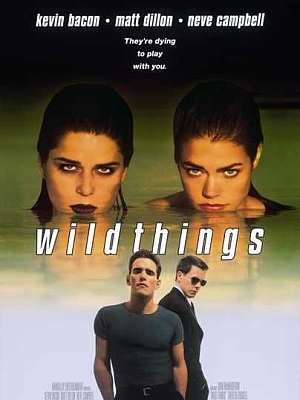
I'd kind of wanted to see this film for a while, because it's featured in Knocked Up (see last Tuesday) and it was an installment in The A.V. Club's ongoing feature The New Cult Canon. It's not the kind of thing I usually like--campy thriller full of intrigue and hot girl-on-girl action--but I enjoyed it. It's over-the-top and twisty enough to be hilarious as well as captivating. It kind of reminded me of Teeth in that way--kind of gross and crazy, but keeps you guessing and laughing. This movie was even more tangled and exaggeratedly sexualized that that one, and though I don't know if you'd actually call it good, it's definitely entertaining.

The fact that it's full of double-crossing and shocking reveals and surprising switches of loyalty reminds me of the movie Duplicity, with Clive Owen and Julia Roberts, which came out a few weeks ago. It's gotten good reviews, but I have no real desire to see it. My friend Erik told me that it keeps you guessing and that everyone is out for him or herself, which sounds a lot like Wild Things. I told him that I usually like that kind of movie when I see them, but I rarely want to see them. It's very true: thrillers, whether they're light and crackly or dark and violent, are rarely on my list of movies to see. I'll sometimes see such a film if it's getting lots of good reviews and/or has been nominated for awards, and almost always I like them. The year in movies 2006 is a good example of this: I was coerced by friends into seeing The Prestige and The Departed, both of which involve lots of secret identities and sleight of hand, and I loved both of them: they were probably my two favorite movies of that year. But I barely noticed them or planned to see them until my friends encouraged me.

Maybe a movie like Wild Things, which on paper I would probably shy away from--and even in reality was a little lukewarm at times--should be a wake up call for me, to branch out from my beloved diet of indie, dialogue-heavy comedies and coming-of-age films. Maybe I should start moving more mysteries and thrillers to the top of my Netflix queue. We'll see.

Thursday, April 9, 2009

Day Twelve: Zero Day


I didn't exactly intend to rent Heavenly Creatures and Zero Day at the same time, but I knew before watching them that there would be a lot of thematic crossover. And there is: a pair of best friends coldly driven to murder by what they see as a world against them and their genius. Zero Day is a fictionalization of the Columbine massacre, told almost entirely through the eyes of the two boys who carried it out. I'm strangely drawn to pop culture about Columbine. It's one of the first major media events I can clearly remember reading about in the newspaper and hearing about at school. One of my favorite movies is Michael Moore's documentary Bowling for Columbine, and while that has a lot to do with his quick and fascinating exploration of America's love of guns and violence, some of the most chilling and resonant scenes in the documentary focus on the day of the shooting itself, playing 911 calls from that day and surveillance camera footage of the gunmen striding around their school cafeteria as they carry out the shooting. I also really responded to Gus Van Sant's Elephant, another fictionalization that came out around the same time as Zero Day, and She Said Yes, a memoir by one of the victim's mothers.

Although the subject matter and some themes are similar, Elephant and Zero Day could not be more different stylistically. While Elephant dreamily and painfully follows several students through the day, a very normal and even boring school day up until the shooting, Zero Day starts about a year before the shooting and leads up to it entirely through the boys' video diaries about their "mission," their plans for what they call "Zero Day." The boys, Andre and Cal, are both fairly likable, very articulate and seemingly clear-headed about their plot. Although they speak derisively of their popular, entitled peers and really only feel comfortable with each other, they each have loving, involved families. Their video cameras capture their matter-of-fact weapons stockpiling and personal ruminations about their plans, but they also capture cheerful, normal conversations with their parents, who seem only to have their best interests in mind. My heart ached to think of those parents dealing with their children's inexplicable murderous rage and suicides.

It's never really clear why the boys decide to shoot up the school, aside from talk of how it will be a wake up call to tell people to appreciate their lives and respect others. The film doesn't show them coming up with the plot; it's in place from the beginning, and Cal says at one point that they never actually discussed it, just always knew. Like the girls in Heavenly Creatures, they speak almost reverently of the fortune of finding each other, of bringing their geniuses together. The film almost deliberately refutes popular media explanations for their behavior: the loving families, as mentioned before, along with the boys' burning of their CDs and video games to show that those things did not influence them. Though their careful discussion of logistics shows them to be coldly premeditated murderers, the boys still come off as so intelligent and in some way decent in the film that you can't help but sympathize with them. I certainly wasn't cheering them on as they prepared for the shooting, but I couldn't help but understand their feelings of detachment from their peers, especially when Cal goes to the prom and is shy and uncomfortable around his obnoxious, judgmental (very real-seeming) classmates. Of course, most kids who don't fit in take it out in writing, or painting, or music, or just muddle through until they can escape to college; they don't open fire on their classmates.

At the end of the film, all I could think was what a waste it was: these smart, resourceful kids could have directed their sensitivity and intelligence at something constructive and meaningful. Instead, they died at 18 and took several innocents with them. And I don't know if anything was learned from Columbine. Other shootings have happened since, and kids still sneak guns and knives into my high school. And people seemed to spend too much time in the aftermath blaming it on various problems with America and society to focus on the boys themselves. So for that, Zero Day is to be commended.

Wednesday, April 8, 2009

Day Eleven: Heavenly Creatures


I read a review of this a while ago and was instantly intrigued by the description of a story, based on real events, of two young girls who get lost in each other and their imaginations to the point that they murder one of the girls' mothers because she is an obstacle to their friendship. I put it off for a while because I didn't want to remember too much of the plot, making it more surprising, but I still knew throughout the movie how it all ended, and the last part of the film leading up to the murder was almost agonizing.

The movie will definitely stay with me, be under my skin for a while, but I didn't really like it, and I think part of that's because the girls, Pauline and Juliet, weren't very likable or sympathetic to me. Their self-absorption and hysteria was kept the center of the film throughout, and I couldn't help but feeling sorry for the more pedestrian but also kinder people around them, especially Pauline's parents. Her mother's simple cheer and genuine love for her daughter, despite the fact that she doesn't understand the girl's rage and intense passion for her best friend, was heartbreaking to watch. In the moments leading up to her death, she's simply enjoying a walk in the park with her daughter, and it's painful to know what's coming for her and to be certain that she doesn't deserve it. The film neither demonizes nor sympathizes with the girls, but I more or less hated them. I was kind of shocked when I saw that both were released from prison after 5 years and went on to lead presumably normal lives. Even though they were very young (15 and 16) and self-deluded when they committed the murder, I still felt as if they deserved a harsher punishment.

Maybe part of the reason I couldn't like the girls is that, although I've always been pretty introverted and sensitive, I don't know what it's like either to have one single best friend to whom you confide and trust everything or to retreat into imaginary worlds of your own creating. I did write a lot of stories from a very early age, and I did make up my own country when I was eight or so. But maybe I've always been more pragmatic, because where Pauline and Juliet fantasize gleefully about their "fourth world" in which their enemies are slaughtered and their favorite people are saints, I spent more time filling journals with textbook-like details about Zomdia's geography, history, and local customs. And I've always had groups of friends, usually several groups with whom I spend time separately. I've certainly been furious with my parents for restricting my free time in the past, but I never once imagined doing harm to them. It was hard to see the girls in the film as anything but selfish and egomaniacal, especially when actual excerpts from Pauline's journals were recited in voiceover, about how she and Juliet were geniuses misunderstood by the rest of the world, and how the night before she planned to kill her mother was like Christmas Eve.

I don't think you have to sympathize with a murderer to enjoy or appreciate a film about one, and I think this was a very good movie. There's just something about it that makes me cold.

Tuesday, April 7, 2009

Day Ten: Knocked Up


Technically there's no rule against watching a movie I've already seen more than five times, and tonight I desperately needed something familiar and funny and warm. My busy semester caught up to me this week; I'd spent the last couple of days recovering from the weekend and kept awake at nights thinking of all the work I have to do this week and next. And then this morning in Cinema and Ideology we had an intense discussion about America and the world and the current economy, and suddenly all day I was feeling sick and uncertain and unloved and frightened by the prospect of living in this world. It built up on top of me all day, until tonight talking to a friend I just started bawling thinking about human beings starving and being tortured and abused and laughed at and murdered, people feeling trapped or despairing or unloved. It all hit me at once that the world is not really a happy place, and I can't do much to make it happier. I'll graduate and enter the workforce in a year, or maybe in four or five years if I go on to grad school, and then I'll spend the rest of my life working and worrying about money and then I'll die.

So with this existential crisis weighing on me, I naturally decided to watch Knocked Up. Even though The 40-Year-Old Virgin had come out two years earlier and been popular, I think Knocked Up really kicked off the Apatow empire, and it remains my favorite of those films. There's just so much reality and joy in it, in the forming of unconventional families and figuring things out little by little, even as the dirty jokes keep coming. I love the parts where the five guy roommates are just sitting around smoking weed or otherwise killing time and ragging on each other. Their scenes feel very natural, and they're also hilarious. It's very similar to the dynamic on one of my favorite TV shows, How I Met Your Mother, where five friends sit around and try to one-up each other with clever and/or dirty puns. I love how, in both cases, the jokes aren't only for the audience's benefit, as with many sitcoms; the characters and the actors themselves are obviously having a great time. My favorite character in Knocked Up is the one played by Jay Baruchel, because his delighted laughter at his friends' jokes has to be real.

So is this the salve for my malaise? Finding small moments of happiness, blissing out to silly movies? It seems a selfish solution; I mean, who am I to veg out and cackle at jokes about pubes while there are people suffering? But what can I do? Work hard, try to be a good person, and luxuriate in some cheerfully raunchy movies from time to time--I guess that'll have to work.

Monday, April 6, 2009

Day Nine: St. Elmo's Fire


And it's yet another movie about post-college confusion and drama among a close-knit group of friends. I swear I'm not trying to pick movies that play into my own young-adult insecurities. I've wanted to see St. Elmo's Fire for a while, since I'd often heard it described as like The Breakfast Club five years later, or something like that.

Since I just watched Reality Bites, it was impossible to not compare the two. I liked that one much better, whether it was my appreciation of the snotty Gen-X sarcasm (as opposed to cheesy 80s posturing) or just that I like those characters and the actors that play them better. This movie's characters were just so self-satisfied and one-track. I suppose the same could be said of Reality Bites, but I felt as if those characters were more well-rounded and had realer problems. If nothing else, both movies had the exact same character: the good-looking bad boy (Rob Lowe, Ethan Hawke) who's constantly called "talented" despite being in a terrible bar band and who harbors a secret love for the main character even as he sleeps with every other woman around.

The focus on a large group of friends from college, a mix of guys and girls who date and hook up within the group, reminded me a lot of The Big Chill, one of my favorite movies. That movie focuses on a very similar group about ten years later, when they've all been out of college for quite a while and had time to get married, have kids, sell out, and become disillusioned. In that movie, the Rob Lowe/Ethan Hawke character has killed himself, and it's his funeral that brings them back together to reminisce and let old feelings resurface. One interesting thing about the movie is the character of Chloe, a younger woman who was dating the man who committed suicide. As an outsider, she notes how self-absorbed and nostalgic the friends can be: "I don't like to talk about my past as much as you guys do." St. Elmo's Fire similarly makes it seem as if the friends, with the possible exception of Mare Winningham's character, have nothing to do but obsess and talk about themselves and each other.

Both the St. Elmo's Fire and Big Chill groups of friends remind me more than anything of a certain group of people I got to know last summer because I was dating one of them. They've known each other for years, they're a mix of guys and girls, they've all dated and/or hooked up with one another. They've got a ridiculous number of inside jokes that they'll trot out at any provocation, much like the St. Elmo's Fire group's stupid cheer ("A booga booga booga!"). I used to wonder when I hung out with those guys, and I still do every so often, how they will grow up together--whether they'll stay close, who if anyone will get married, whether they'll someday all get back together for a day or weekend like The Big Chill crowd, and what will be the reason. I certainly have close friends, but not so big and so close a group as theirs. Sometimes I wish I did--the characters in St. Elmo's Fire seem pretty happy with their readymade social circle--but it's also nice to have some freedom.

Sunday, April 5, 2009

Day Eight, pt. 2: Eagle vs. Shark


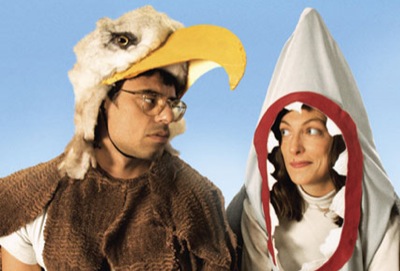
Eagle vs. Shark is another film I've been wanting to see since it came out, almost two years ago. I missed its screening at the Minneapolis-St. Paul International Film Festival (which is, excitingly, coming up again; it's always a highlight of springtime), and then it never came to my hometown during its limited release in theaters. I figured I'd like it, since the trailers showed off the kind of offbeat, quirky-to-the-point-of-artificial humor I like in movies such as Napoleon Dynamite and Wes Anderson's films. That kind of twee-ness is only enjoyable in small doses, though; it can grate if it's not done well.

So my opinion of Eagle vs. Shark went back and forth as I watched. A few "big reveals" were obvious to me from a mile away, and the sort of studied, gloomy weirdness of all of the characters, most with their requisite odd personality traits, kept the film from being emotionally resonant at times. And the romantic leads are so awkward at times and not even always likable. But it won me over with its moments of hilarity, most of which were fairly organic and character-based. The characters are so strange and exasperating and at times pathetic that you can't help but love them. And the music adds a sweet if predictably indie touch.

One thing about these indie romantic comedies is that I've never known anyone who had such an awkward, bittersweet, quirky romance. Maybe it's just personal; maybe a lot of relationships are more fragile and strange than the people in them let on to the outside. Maybe I'm just too mainstream, and so all of my experience falls within the scheme of parties and alcohol and hook-ups and texting and Facebook relationship statuses, with no homemade animal costumes or shy hula-hooping smiles involved. But that sounds like my life is closer to He's Just Not That Into You than Eagle vs. Shark, and I certainly don't want that. Maybe I've just yet to meet someone who fits me in that way, with whom I can have those strange and beautiful moments.

Day Eight: Reality Bites


So I've fallen off the wagon a bit: yesterday was too full of sleep and partying to watch a full movie. Such is college, I guess. I'm going to be ready to be done with the cycle of seemingly endless tests and papers and class and dining hall lunches broken up by weekends of oblivion (whether that means sleep, alcohol, or just zoning out watching The Simpsons). The only trouble is knowing what to do when it ends.

Reality Bites (1994) deals somewhat with that question of how to make sense of your life when you're done with college, still living with the same friends and preoccupied with the same things but faced with the reality of finding a job and taking care of yourself. The movie acts as if this was a problem specifically for Generation X. The main character, Lalaina, makes a documentary about the search for identity among people in her age group, and her friends deal with "contemporary" problems like coming out to one's parents and the threat of AIDS. But it's been 15 years since Reality Bites came out, and though the circumstances of the world have changed a lot, I don't think the mid-twenties feeling of confusion is much different.

This part of life has been the subject of many movies, and I tend to like them a lot. Noah Baumbach's Kicking and Screaming, Cameron Crowe's Singles, and Zach Braff's Garden State are all movies I loved watching. This movie might be a little too self-conscious for its own good--the dialogue, while fun to listen to, is slangy and sarcastic to the point of artificiality, much like the movie Juno. And its focus on Lalaina, who can't add 85 and 45 in her head or define irony despite being the valedictorian of her college graduating class, leaves some potentially interesting supporting characters feeling unfinished. But I think it has some interesting things to say, mostly in the scenes that are supposed to be footage from Lalaina's documentary.

Two of those scenes come courtesy of Janeane Garofalo's character Vickie, my favorite person in the movie. In one, she visits a free clinic to get tested for AIDS, with Lalaina and her camera tagging along. She jokes and grins about the ordeal, throwing up a wall of sarcasm, but suddenly she admits that she's there because a friend tested positive for AIDS. The camera lingers on her as her mask drops and she falls silent, obviously worried. In another scene, she folds sweaters at the Gap while talking about her success as the store manager. Here she also rolls her eyes and jokes, but her wall of sarcasm falls again, and this time it's masking real joy and pride in her work. I liked the idea that jobs don't have to pay a lot of money or require a college education to be worthwhile to the person in them. Lalaina may have aspirations to change the world or create great art, but for Vickie the Gap is surprisingly fulfilling, and she's mostly okay with that.

It reminds me a lot of what I was saying about Adventureland, of crappy temporary jobs turning out better than ever expected. Sometimes I feel like my eventual search for a prestigious job that uses my degree will just be the result of societal pressure. On the other hand, Lalaina's documentary, the kind of thing I want to make someday, also inspires me. Whatever I end up doing, I hope movies have something to do with it.

Friday, April 3, 2009

Day Six: Adventureland


I've been excited to see Adventureland since I first saw the trailer over Christmas. Partly it's because of its connections to the Judd Apatow empire: written and directed by Greg Mottola of Superbad, with a major supporting role for Freaks and Geeks alum Martin Starr. I'm also a fan of the star, Jesse Eisenberg, who was great in The Squid and the Whale and here plays the same kind of clueless, affected intellectual as he did in that film. But mostly I just knew Adventureland would play to one of my strongest sensibilities: my love of my summer job.

I started working at Showplace 16, the movie theater in my Illinois hometown, just before finishing high school. I needed something to do in the months between graduation and leaving for Minnesota, and like the main character in the movie, I saw my minimum-wage position at Showplace as transitional and primarily useful as a source of extra cash. It was my first real job. Previous summers had seen me volunteering as a day camp counselor and spending weeks away in nerdy pursuits like band camp and, even worse, quiz bowl camp. I didn't think ahead too clearly, but I vaguely assumed that Showplace would just be for those few months before college. And then, well, I'd be in college. The job was slightly more dignified than character James' position running the games at his local trashy carnival, but it did involve sweeping up other people's trash, wearing a bowtie and oversized blue newsboy cap, and shamelessly urging people to buy obscenely large drinks and popcorn. I didn't talk to many of my coworkers at first, and I was slightly embarrassed whenever I saw a former classmate come in to see a movie. As James says in the movie when his mom suggests he hang out with his old friends, "And tell them I work as a carny?"

But it's almost three years since I first started there, and I'll probably be heading back for another summer. Like James, I never could have foreseen that my shitty summer job could bring me some of the best memories and closest friends of my life so far. I met two boyfriends through Showplace 16, and I've met people I now count among my best friends. I've laughed so hard I couldn't breathe, and I've cried a little. I've had terrible days when people yelled at me or I slipped and fell on popcorn grease or I was just tired and didn't want to be there at all, but that comes with any job, really. And my overall feeling about Showplace 16 is one of happiness and comfort.

I think part of what's so great about such jobs is that they really are a space outside of time and other constraints, a great leveler. I may have scored twice as high on the ACT as some of my coworkers; I may leave at the end of each summer to go study journalism in a big city far away, but when we're stacking Mega Tubs on the concessions counter or mopping up cherry Icee in the lobby, none of that matters at all. In those summers, I don't have to think about the future, don't have to constantly worry about my honors thesis or grad school applications or what the hell I'm actually going to do when I'm ultimately ejected into the "real world." I'm surrounded by people with whom I instantly have a shared language and a common goal--serving customers and getting through the day--and somehow it just feels better than the grimmer, more posed world of college. As Adventureland shows, everyone is the same at a minimum-wage job, even though people are known for different things, and you forge random connections with people. And maybe you meet someone special and have a summer romance, as James does in the movie, or maybe you just have fun with people you may never talk to again. I can only hope whatever "real" job I get someday is as much fun.

Thursday, April 2, 2009

Day Five: All the President's Men


I wonder if there's a journalism student out there who hasn't in some way been affected by Alan J. Pakula's All the President's Men. It has to be responsible for at least half of the majors in journalism since it came out back in 1976. I know my image of journalism, real journalism, the journalism I wish I were going into, is lifted almost verbatim from that film. Like many students, I assume, I watched it in an actual journalism class, my newspaper class when I was a freshman in high school. Watching it today in a film class brought back memories of that time, when I eagerly wrote articles designed to be provocative and controversial.

My big story that year was "Goths, punks not individuals"--a far cry from bringing down the president and many of his underlings with a series of Washington Post articles about Watergate. But it caused a minor stir at Auburn High School that year, or at least it seemed so to me. I asserted that the many black-clad, hair-dyed, lip-pierced kids who always clustered in the commons were laughably conformist despite their noisy claims to the contrary. I was excited when it came out because upperclassmen in newspaper had praised it. The day it came out, the girl who sat next to me in newspaper warned me that her goth friends were out for blood. Apparently people were muttering my name in the hallways. While it made me nervous--I remember being scared to walk through the commons--it also thrilled me. Two years later, my scathing editorial criticizing the hall monitors for verbally abusing students and treating them as "innocent until proven guilty" caused even more of a stir. Then too, I was partly embarrassed and even annoyed at the attention, especially the hall monitors' open dislike of me after that, but I also loved the feel of commanding attention and investigating issues with my words.

Watching the movie today brought some of that back, at least a little. I'm now a third-year journalism major, and I've had the chance to work on some fun and interesting pieces for class and for the Wake, the student magazine I write for. I still love to write, and I still love the feeling of following a story, going from one source to the next, running around campus to meet up with interview subjects and find events. Even though Woodward and Bernstein's investigation in the film is difficult and largely frustrating, as door after door closes in their face and their daring assertions in the paper are contradicted by top officials, their performances convey a kind of joy in the process. It's fun for reporters to ferret out a story, and when the stakes are that high it must be especially exhilarating.

It's a little sad because journalism, though it certainly still involves reporting and investigating, just isn't like that anymore. You don't struggle to meet an evening deadline so your story can be rushed to the presses and land on people's doorsteps the next morning. It's about the Internet and convergence and phones and blogs and citizen journalists. It's a world I don't even know about being part of; right now I'm pretty sure I'm not actually going to pursue a career in journalism. I don't know what I'm going to do with my life; there are possibilities floating around but few concrete plans. It seems kind of sad to me now that all those years of working and writing and aspiring to be like Robert Redford and Dustin Hoffman with their '70s haircuts and cigarettes will come to nothing.

(Note: This is a bit of a cheat because I'd already seen the movie and I watched it in class. But I'll watch two movies tomorrow or the next day to compensate.)

Wednesday, April 1, 2009

Day Four: Teeth


I'd had Teeth--which I have always thought of as The Vagina Dentata Movie--in my Netflix queue for months now, intrigued by its premise and by its fairly decent reviews. The movie follows a girl's rapid transformation from an obsessively abstinent goody two-shoes to newly empowered fighter when she discovers her own toothed genitalia. The main character's wide-eyed performance and the bloody scenes of horror make the film deliciously campy. I laughed out loud many times, especially when the gynecologist played by Josh Pais was writhing on the floor screaming "Vagina dentata! Vagina dentata! It's real!" Horror spoofs aren't usually my thing, mostly because I don't watch that many horror movies and am easily scared. As I told a friend the other day, I don't like movies that are scary-funny or action-funny; I want my funny movies just funny. But I loved Teeth.

One of my favorite aspects was the depiction of the abstinence group in which main character Dawn is a leader. Though their cult-like chanting is somewhat exaggerated, the characters' earnest plans to avoid temptation and even sexual pop culture, like seeing a kids' cartoon on a double date because "even the PG-13 will have some heavy making out," felt realistic as well as funny. I was certainly never as single-minded or starry-eyed about abstinence as Dawn and her friends, but the rhetoric felt familiar from my high school youth group days. Though parts of the film were over-the-top, Dawn's conviction in saving herself for marriage, her automatic judgment of people who do engage in premarital sex, and her guilt at feeling physically attracted to a classmate were all real and sympathetic.

I think the vagina dentata works as an interesting and even subversive metaphor for female sexuality. Discovering this new part of herself is frightening for Dawn, but it becomes empowering and liberating. Abstinence isn't the only way to avoid being taken advantage of and made an object. The camera largely avoids objectifying her as it does to women in so many movies, including a lot of horror films. It's much more brutal to the men here. My film classes in college have often touched on the idea that Hollywood film is inherently masculine and objectifies women, cutting them up and putting them on display for male gratification (Laura Mulvey's essay "Visual Pleasure and Narrative Cinema" is the main source of these ideas). As someone who hopes to make movies, or be part of the filmmaking process, I've wondered how a feminist filmmaker might get around that. I don't know if any film can completely succeed when it uses the film conventions created by men, but I think Teeth does a fairly good job of not playing into female objectification.

I certainly consider myself a feminist, and I groan and cringe when my friends, male and female, dismiss feminism. Not long ago, I got in a vehement and slightly drunken argument with a couple of male friends about the need for women's liberation in today's society, the sexism and mistreatment of women that is still quite prevalent, despite their scoffing. So I appreciated Teeth's message of women discovering their own resources, couched as it was in gore and camp.

Tuesday, March 31, 2009

Day Three: The TV Set


I don't know if I would have ever discovered The TV Set (2006) without my favorite one-stop shop for semi-elitist pop culture news and reviews: The Onion A.V. Club. The film, directed by Jake Kasdan (better known for directing Walk Hard: The Dewey Cox Story), has been mentioned multiple times by the site's writers as being a sharp, funny, and woefully underrated look at the making of a TV sitcom pilot. I finally got around to watching it through Netflix's watch instantly feature, which will surely be the source for many of my daily movies on this blog.

I liked the movie a lot, because I love movies and TV shows about movies and TV shows. Also because it's hilarious. Sigourney Weaver's batty variation on the Faye Dunaway character from Network had me laughing with almost every line. The comparisons to Network are obvious--an inside look at the running of a TV network, the ruthless desire for ratings, the souring of everything into crass entertainment--but while that film has some great scenes and performances, it's pretty harsh and stilted. Maybe it's just that I'm familiar with current TV, so I know what The TV Set is commenting on: lowest common denominator reality shows become "Slut Wars," and sitcoms with bland leads, shallow jokes, and meaninglessly zany titles become "Call Me Crazy." But The TV Set is not only realer to me than Network, it's also funnier, and with more sympathetic characters for the most part.

I'm often depressed by the anti-intellectual strain and tendency toward mediocracy in American society, as only a properly snobbish hipster can be. I despise the celebration and rhetoric of politicians like Sarah Palin, who claim to be just your average red-blooded Americans, and the distrust and labeling of those like Barack Obama, whose Ivy League education and oratory skills are seen as being out of touch, rather than important assets for a world leader. The idiocy of some sitcoms was of course exaggerated in the film, the writing made cartoonishly horrible. But while watching the film, although much of my laughter was rueful and cringing, I did think to myself that it's really not so bad. There are some pretty smart and hilarious shows out now, and a lot of them are on network television. The dumbing down of Hollywood is real and at times hugely depressing. (Just think of those movies Jason Friedberg and Aaron Seltzer keep churning out--Epic Movie, Disaster Movie, etc.) But despite my elitism, I'm a movie and TV optimist: I'll prefer to hunker down and watch The Office and Milk, keeping dubious faith in the people who make what I love.

Monday, March 30, 2009

Day Two: Synecdoche, New York


I watched Synecdoche, New York for the second time in two days. My friend Ben, who loves watching and discussing classic and acclaimed films even more than I do, told me that I would have to watch it at least three times, but I think I'd have rewatched it even without his advice.

I knew I would enjoy the film, because director Charlie Kaufman wrote the scripts for three of my favorite movies: Being John Malkovich, Adaptation, and especially Eternal Sunshine of the Spotless Mind. It is definitely even deeper and more postmodern than those films, but it is just as emotionally resonant--for me, anyway. It centers on Philip Seymour Hoffman as a theater director, Caden Cotard, using his MacArthur grant money to create a huge, years-long, audience-less play that recreates New York City inside a warehouse and his life and relationships in scenes, played out by actors who in turn become part of his life, until the lines blur between what is real and false. His play is about death, what everyone is going towards, and it's about love, what everyone wants.

Synecdoche means a part that comes to represent the whole, and I think that's what the film, and Caden's play, is about. It's a microcosm of life, the search for meaning, the long years of waiting for something to happen that will probably turn out very differently from what you expected. And then you die, as the character ultimately does in the last second of the film. You think you are the center of the world, and you only see yourself, as the character does. But you're not the only one: "There are nearly 13 million people in the world, and none of these people is an extra. They're all the leads of their own stories."

Near the end of the film, everything begins to be connected, in shattering and melancholy ways. And that too, I think, is like life: "Everything is more complicated than you think. You only see a tenth of what is true." It's this vision, this fractal-like view of the world, that I would like to believe. Everything connected, in ways we can't even imagine.

Ben told me to watch the movie imagining that it's about me. I didn't wholly do that--the characters are interesting and fully realized enough--but I can see how that makes sense. One thing that I got from it, though I don't know if this message was intended, was that we never know how things will turn out, except that we'll all die. Caden's relationship with Hazel ends uncomfortably when they are young, and when they run into each other on the street years later it's fairly awkward and impersonal. In another movie, maybe that would be the last of them, signalling that their love has turned into cold politeness. But years later, when they are old, they reunite again and become lovers for a brief, happy moment.

Maybe because I'm overly influenced by movies, sometimes an awkward conversation with a friend or a long stretch of not talking to someone will lead me to gloomily believe that we're not close anymore, that we never will be. But then we talk again and are friendly. As in the film, life keeps going until you die; there aren't resolutions until the final one. I don't know exactly what that means--and oh, there's so much more in the film I can't really begin to understand--but I think it's true.

Sunday, March 29, 2009

Day One

GUIDELINES

As the title of this endeavor implies, I will, from now until the end of April, watch one movie per day. More than one is perfectly acceptable.

Movies seen in the theater count; movies screened in class do not.

A day may pass without a movie being seen, but it must be atoned for by the end of the week with two movies in one day.

Each movie will be logged here.